Mattresses, Sheepskins And SIDS: What Parents Need To Know

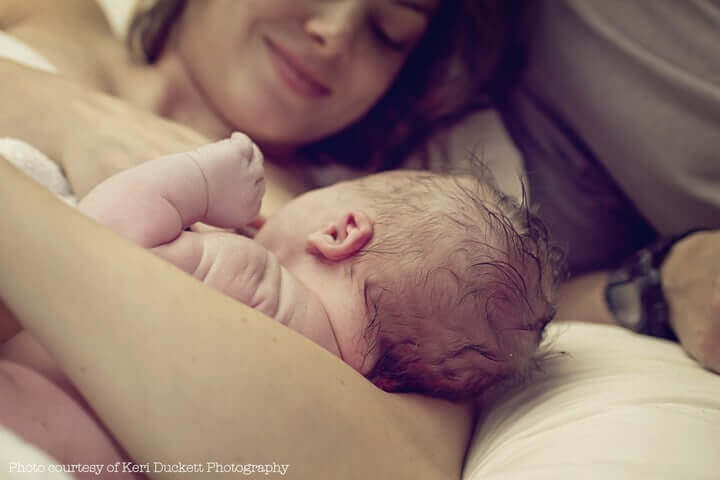
Micah on his sheepskin

In The Bedroom Closet, Just Above My Little Black Dress

. . . a handcrafted sheepskin rug sits loosely rolled, listening eagerly for snippets of conversation about pregnancy tests and due dates as I rummage for a pair of matching flip flops. Lately, though it’s been looking a little listless, and I can’t help but wonder if it overheard me talking about it’s possible retirement. Here’s why:

Though sheepskins are often used in NICU’s to prevent heat loss, pressure sores, and increase positive outcomes such as weight gain and early discharge from the hospital, critics say they produce toxic nerve gases which trigger Sudden Infant Death Syndrome (SIDS). And it’s not just this favorite with the crunchy mama crowd, but regular mattresses, too.

Uh, What?

I’ll admit I almost brushed this off when I first heard it because it just sounds nuts. Hybridized grass spontaneously making cyanide and killing cattle sounds crazy too, though, and that really happened. So I did some digging, and here’s what I found:

Sheepskins and regular mattresses contain phosphorous, arsenic and antimony, which are the preferred food of a common household fungus, S. Brevicaulis.  While these elements are naturally occurring some (but not all) sheepskins, they are actually added in via the manufacturing process of regular mattresses. Arsenic and antimony are used as preservatives in mandatory flame retardants and phosphorous is a plasticizer used in mattress covers – anything containing PVC will have these compounds.

According to Barry Richardson, a British chemist specializing in preventing the degradation of materials, when S. Brevicaulis gets established in a mattress it converts these compounds into toxic nerve gases which can shut down the nervous system, stop heart function and arrest breathing.

Stibine gas, which is formed from the interaction of the S. Brevicaulis fungus with antimony, is particularly heavy and – according to the theory -  clings to the surface of the mattress. “A baby sleeping face down will breathe this gas directly and is more likely to inhale a lethal dose,” says this this article in Midwifery Today, adding that “babies sleeping on their backs are still exposed to the lighter nerve gasses: arsine and phosphine. In a warm environment phosphine can be similar to the density of air, and easily inhaled by a baby sleeping on its back. In addition, face-up sleeping is not as effective in a cot or bassinet with enclosed sides, because the gasses cannot flow away.”

Now, Just Like The Controversy Surrounding Autism And Vaccines . . .

The connection here is disputed. Some scientists dismiss the theory, saying they were able to produce nerve gases in a lab environment but not in a crib setting.

While that’s true, it may be because the studies were working with crib mattresses that had a neutral PH. Real world mattresses often have traces of spitup, sweat and urine that can make the PH more acidic. S. Brevicaulis thrives in an acidic environment, so this might explain the varying results.

It’s not as if it hasn’t happened before. Back in the 1880s arsenic-laced pigments in wallpaper, curtains and carpets interacted with household bacteria and fungi to create a different deadly gas, trimethylarsine, which killed thousands of children. The source was discovered by the  Italian chemist Gosio in 1892, and continued work on his findings states that ”many microorganisms (bacteria, fungi, and yeasts) and animals are now known to biomethylate arsenic, forming both volatile (e.g., methylarsines) and nonvolatile (e.g., methylarsonic acid and dimethylarsinic acid) compounds.” (source)

Before we jump into journal citations I’d like to share with you one fact that I found very compelling: The risk of SIDS increases (some say doubles) with the birth of each child – a trend that is most pronounced in low-income households (Source 1, Source 2, Source 3). Could this be because parents are likely to re-use the same mattress, allowing the fungus to become more established with the addition of each new little one?

Studies, Counter-Studies, & Counter-Counter Studies

In the past few weeks I’ve spent, oh, maybe 16 hours sifting through articles and journal publications regarding the toxic gas theory. By this point in the research process I usually have a pretty clear opinion, but this is different. The data is too polarized for me to draw conclusions, but I felt it was worth presenting so you can make the decision you feel the most peace about. So let’s start at the beginning and work from there, okay? According to the Midwifery Today article, the original proponent of the theory, Dr. Richardson, began his research by asking:

local coroners to cooperate by releasing mattresses on which SIDS babies had died. He received 200 mattresses of all varieties: foam, plastic, fabric and netted. By June 1989 all mattresses had been tested with the following results:

  • Every mattress was infected with the S. Brevicaulis fungus as an organism and spores.
  • All mattresses had one or more of the chemicals phosphorus, arsenic or antimony.
  • Each mattress generated one or more of the nerve gasses (phosphine, arsine or stibine) when brought to blood/body temperature.

At this time, Richardson analyzed six blood samples of the SIDS babies who died on mattresses with antimony and found high levels of antimony in each sample. In addition, Richardson learned that 95 percent of mattresses tested had been used by a previous baby.

In this subsequent study, however, researchers tested 19 SIDS case mattresses, 1 non-SIDS death, 20 used controls, and 10 new unused to determine if the fungus was present. Only four of the mattresses (3 of which were SIDS case mattresses) contained the S. brevicaulis fungus. However, the researchers did note that “differences were found between SIDS and used controls in the variety of fungal species isolated and the numbers isolated from fillings,” adding that “Scanning electron microscopy of mattress covers and fillings showed microbial ‘biofilms’ in the head areas of all SIDS cases examined. This was not seen on other samples.”

In another study the New Zealand Cot Death Study Group compared 393 case patients with SIDS with 1592 control subjects in order to examine sheepskin bedding as a risk factor. They found that:

The relative risk for SIDS with sheepskin use was significantly increased in the infants placed prone [on their tummy] to sleep . . . but not for infants placed in the supine [back] or lateral [side sleeping] position.

An interaction between sheepskin use and bed sharing was also found. Sheepskin use was associated with a decreased risk of SIDS among infants sharing beds  . . . but an increased risk among infants not bed sharing. We conclude that if an infant needs to be placed prone to sleep for medical reasons, a sheepskin should not be used as underbedding. However, for infants placed supine to sleep, sheepskins are not associated with an increased risk of SIDS.” (emphasis mine)

Was the increased risk of SIDS for tummy sleeping babies due to obstructed breathing from the lambskin or the presence of heavier-than-air stibine gas? It’s impossible to say. Why did the bedsharing babies experience a decrease in risk? I have theories on that which I’ll share later, but for now let’s look at a few criticisms of the theory.

Critics Say . . .

The toxic gas theory has been thoroughly disproved because it “cannot explain the characteristic[s] commonly associated with SIDS, for example the winter peak, or the higher risk in infants whose mothers smoked, were bottle-fed, were bed sharing, or who had intrauterine growth retardation.”(3) They also contend that SIDS sometimes occurs in circumstances where fungal growth is not a factor, such as a parents arms, and that SIDS investigations do not indicate poisoning by these gases. Proponents, on the other hand, say these objections can be seen from another perspective:

  • Perhaps the winter peak occurs because”[w]indows are kept shut, creating poor ventilation around the crib. Gasses are less likely to dissipate. Babies are often bundled in blankets during the winter, trapping gasses close to their bodies.” (source)
  • Poor lung development due to maternal smoking and intrauterine growth retardation could make a baby more susceptible to toxic gases
  • Bottle-fed babies typically develop different sleep patterns than breastfed babies (more on how this could be a factor in later)
  • As cited in the New Zealand Cot study above, bedsharing actually reduces the risk of SIDS when done safely
  • SIDS is an umbrella term that may have more than one cause, so although it might explain many cases, but some such as the loss of a child in a parent’s arms could have a different cause
  • “The lethal dose of nerve gas doesn’t make them ‘ill’ [as it would in an adult who was exposed over a long period of time]. It acts by shutting down the nervous system, stopping heart function and breathing. Research has shown neurochemical deficits in SIDS babies that are consistent with poisoning by nerve gas.” (source)

What About Vaccines? Haven’t They Been Implicated In SIDS?

Though there is no formal acknowledgment of a causal relationship, critics of the current vaccine program often point out the peak age for SIDS-related deaths (2-4 months) coincides exactly with the introduction of vaccines if the recommended schedule is followed. In the next post ‘ll be talking more this theory and how these two theories may not be competitors, but rather two parts of one picture.

In the meantime, if you have a question or comment please leave it below!

Disclaimer This information is purely for educational purposes and is NOT meant to be SIDS prevention advice. It is not intended to diagnose, treat, cure, or prevent any disease. Mommypotamus does NOT make ANY claims that using a non-toxic mattress will prevent SIDS since this has not been 100% scientifically proven, and there can be other factors involved in SIDS. None of the information or options presented here are considered to be SIDS prevention advice or medical advice.

 photo credit


Related Posts Plugin for WordPress, Blogger...

Enter your email address below:


76 Comments

  1. We read about this before our youngest was born and opted for a mattress wrap to prevent the chemicals from being released into the air. It’s very scary!


  2. Justyn Lang via FB
    Aug 07, 2012

    I wrote about this last year, and have used a non-toxic mattress cover for my babies (starting 4 1/2 years ago). Thanks for making people aware of this, Heather. :-)
    http://creativechristianmama.com/safe-sleep-for-baby/


  3. Portia Drantch
    Aug 07, 2012

    So what is a “safe” mattress other than a brand new one? Are there truly organic ones without the chemicals?


    • Renee K
      Aug 07, 2012

      I did a fair bit of research into this and there are very few TRULY natural mattresses. Many of the ones I came across had used synthetic materials that they didn’t list up front, or they used chemical treatments. I found that Soaring Heart and White Lotus both have safe natural mattresses. We bought organic, spring free latex mattresses from Soaring Heart for the whole family. It was a huge investment but fortunately we had the money at the time and I couldn’t think of anything I’d rather spend it on. Sleep is when we detox, it needs to be in a completely clean environment. We are recovering a son from autism though so we had an extra ‘need’ for the best.


    • Heather
      Aug 14, 2012

      Great question, Portia! I’ll cover that in a Q&A post soon!


  4. Joli
    Aug 07, 2012

    Scary, but thank you for the info and research. I will certainly be looking into it more (and buying a new mattress either way)


  5. Kristen
    Aug 07, 2012

    So, is there something we can do to kill out the S. Brevicaulis fungus? I’m no lover of things like Lysol, but it does kill out a ton of different things like this. What is out there that parents can safely use on their mattresses to control S. Brevicaulis?


    • Kate
      Aug 07, 2012

      I have the same question as Kristen. Is there anything we can do about these toxic nerve gasses aside from throwing the mattress in the dumpster? :(


    • Heather
      Aug 14, 2012

      Unfortunately, it appears that S. Brevicaulis likes to eat chemicals, so I’m not sure that anything sprayed on it wouldn’t just become food. :( There is an inexpensive solution, though, which I will be sharing soon!


  6. Andrea Shorkey via FB
    Aug 07, 2012

    Soo….what is the answer? What kind of mattresses are safe ? I’m genuinely asking, not trying to be snarky. We are expecting #2 in Jan and are in the market for a new mattress.


  7. Cassie Meadows via FB
    Aug 07, 2012

    So what about co-sleeping? My son has peed on our mattress before ( a couple times) but we have an allergen cover now.


    • Heather
      Aug 14, 2012

      Great question, Cassie! I’m a huge fan of co-sleeping and will continue to do so even if I can’t replace our memory foam mattress or use the inexpensive solution I’m going to recommend in the Q&A. More on the protective benefits of co-sleeping soon!


  8. Cassie Meadows via FB
    Aug 07, 2012

    Ug or what if our mattress cover is toxic?
    It makes me wanna sleep on the floor. But then there’s the carpet…


  9. Ashley
    Aug 07, 2012

    Can you read my mind?! 1st, you reposted your lip-tie post last week and from reading it I realized my son is lip tied (and have gotten the ball rolling on finding a good dentist to handle it). For his first birthday I’d already planned to get him an organic mattress, and now this article! So sheepskin and regular mattresses are potentially bad- does that mean organic mattresses are good? What about organic wool? Thanks!


    • Maleahbliss
      Aug 08, 2012

      I realized that my daughter has a class 4 lip tie because of that article too! My doc is sending us to an ENT next week.


      • Heather
        Aug 14, 2012

        WOW – I’m so glad that post was helpful! Making that discovery was the key in resolving my breastfeeding difficulties with my son – I tell everyone I can about it! <3


    • Heather
      Aug 14, 2012

      I’m so glad that lip tie post was helpful, Ashley! Will follow up on your mattress questions in the Q&A :)


  10. Mommypotamus via FB
    Aug 07, 2012

    Andrea Shorkey and Cassie Meadows – Thanks for your questions! I’ll be following up with recommendations based on budget later this week.


  11. Christina Smith via FB
    Aug 07, 2012

    !! Wool mattress would then be the safest?


  12. Jacquelyn Deeney Chain via FB
    Aug 07, 2012

    Scary stuff. Trying to keep our kids safe and healthy is the worlds hardest job. We are battling evils we don’t even fully understand yet! Thanks for the post!


  13. Aubri
    Aug 07, 2012

    My friend got a mattress wrap for a baby gift. Apparently it is used in maybe Australia and new Zealand to prevent SIDS deaths. I don’t remember all the details be their main point was to keep the mold etc from releasing gas up to the baby. I think their stats were pretty impressive. As in like, no SIDS deaths. If I remember correctly.


    • Heather
      Aug 14, 2012

      I’ve heard the same thing, though I think actually there have been some children that died on the wrapped mattresses. According to mattress-wrapping proponents, though, the deaths were vaccine related rather than what they classify as SIDS. More on that in the next post.


  14. Stephanie
    Aug 07, 2012

    I have a few of the same questions as the above commenters. We recently threw away our old mattress (like 25 years old, oh no!) that we’ve been co-sleeping with my 1 year old on. She has peed on it like crazy and we’ve decided it’s time to throw it away. Anyway, we haven’t bought a new mattress yet, but have been sleeping on an organic mattress pad on top of tons of blankets. (We’re crazy freaks). Here are my questions
    1. Organic mattress with no chemicals okay?
    2. All wool mattresses with no chemicals? I wanted this all wool one, but that sounds similar to this sheepskin. I’m a wool lover… she has wool diapers and blankets and all that. Nothing sheepskin though…..

    P.S. I love you mommypotamus. You have been so helpful on my path to more simple and healthy living.


    • Heather
      Aug 14, 2012

      Awww, thank you Stephanie! I’ll cover your questions in the Q&A :)


  15. keller
    Aug 07, 2012

    i may have missed this in the article but wouldn’t it be safer to use an organic mattress? We have one for our daughter.


    • Heather
      Aug 14, 2012

      Some are good, some actually contain toxic chemicals. I’ll break down how to find out which brands are recommended in a follow-up post.


  16. Jessica
    Aug 07, 2012

    Are there ways to reduce S. Brevicaulis on mattresses?


    • Heather
      Aug 14, 2012

      The best way I know of is to make sure it stays dry, but that’s not 100% guaranteed to work.


  17. Kathya Briggs via FB
    Aug 07, 2012

    hmmm… this makes me feel that in the time of my grandma they just were wiser and frugal in what to use.
    I remember laying in a sort “hay” mattress of course wrapped with fabric. It was not soft, it was actually just a tad better than laying on the floor but safe nonetheless. I dont ever remember her complaining about aches.

  18. this is frightening!


  19. JoAnne
    Aug 07, 2012

    Thank you for writing this. I spent hours researching this as well and felt really torn about what to believe. I ended up using a plastic crib mattress wrap for my baby’s mattress, although wondered what kind of potential off-gassing the supposed “food-grade” plastic would have? Sigh. So hard to get answers sometimes.
    JoAnne´s last [type] ..Watermelon Ice Cream


  20. Kirstyn
    Aug 07, 2012

    THANK YOU for posting this– I’ve had a vague wondering for awhile now if SIDS was more due to what tummy-sleepers inhale rather than the position itself, because naturally babies seem to prefer sleeping on their stomachs (in my experience, anyway.) I had already committed to getting an organic mattress when we have children, but I wasn’t sure even THAT would do it, so I’m REALLY looking forward to the rest of the series.
    Thank you so much for tackling huge research projects like you do that are of so much help! I’m not a researcher– I love to read informational books, but I’m not good at analyzing studies, etc., so your efforts are really appreciated.


  21. Erica Hope Kassner via FB
    Aug 07, 2012

    Organic cotton mattresses with a layer of natural wood for natural fire retardation. That would avoid all pesticides in cotton and also avoid the chemical flame retardants required by law.


  22. Monica
    Aug 07, 2012

    What is considered ‘safe’ cosleeping? We had briefly heard about this mattress issue and that it’s the real reason they changed from tummy sleeping to ‘back to sleep.’ This is one of the reasons why our two-month sleeps with us. But what if our mattress is unsafe too? How do we know?


    • Heather
      Aug 14, 2012

      GREAT question, Monica! I think I’ll devote a whole post to it! (coming soon!!!)


  23. Holly
    Aug 07, 2012

    Thank you for this very informative post. I have wondered for quite some time if SIDS could often be related to toxins escaping from the mattresses. Looking forward to the rest of this series!
    Holly´s last [type] ..Shampoo To No ‘Poo: How I Made A Painless & Successful Transition


  24. Monica
    Aug 07, 2012

    I went to the link for the Midwifery Today article and read that. I’m sure you saw the editor’s note at the end? It says that subsequent research has failed to establish a link between the mattresses and SIDS. I briefly read the study from the British Dept of Health that is linked under the editor’s note. Can you go over this in your next post? Thank you so much!


  25. Emily
    Aug 07, 2012

    Just thought I’d share. My first born slept in a crib the first year and after that I decided I didn’t want to use a crib any more (for many reasons). So for #2, who is now 12 months old, I keep him in bed with me. When he naps, I lay a small blanket on the floor for him to sleep on. My husband is from Vietnam and helped reassure me the baby only needs a blanket or mat to sleep on. It helps I don’t use any chemicals on the carpet, you can get a steam mop or something to help keep it clean, but I use simple water and vinegar to clean my carpet/floors. So what I”m saying is you don’t need a crib. They are not very safe anyway.


  26. Laura Ryan Rudeseal via FB
    Aug 07, 2012

    We have always used the BabeSafe mattress cover. They are a little “crunchy” but putting a 100% jersey cotton sheet under the crib sheet helps. They are wonderful for peace of mind AND for keeping mattresses clean and dry too!


  27. Rena Arnold via FB
    Aug 07, 2012

    Ok ready for next blog!! So glad I haven’t bought the new mattress for baby’s bed. I figured I had time since she would be sleeping with us for now. We have a temper pedic. Eagerly awaiting you thoughts…thx for all you do including making me think harder about choices I make for our family!!


  28. Sara Daniels via FB
    Aug 07, 2012

    we got a latex mattress that was not treated with flame retardant (with a doctor’s note). I’m wondering if this would be a safe alternative to the sheepskin since it’s wool? http://www.amazon.com/SnuggleWool-27×36-Baby-Blanket-Organic/dp/B000H44SIY/ref=br_it_dp_o_S_nC?ie=UTF8&colid=3U7KRKKZDHLZ5&coliid=I3U9UWLBLGQA51


  29. Josh 'and'Anne Gibson via FB
    Aug 07, 2012

    So, in case y’all are wondering. There’s one mattress that is in the u.s that is truly organic. With scientific study proven. Containing no chemicals: http://www.healthychild.com/store/categories/Organic-Crib-Mattress


  30. Margo
    Aug 07, 2012

    Interesting Post. I am so appreciative that you are a researcher and educator. Thanks for all you read and share!!
    I heard that IKEA mattresses do not have flame retardants in them. Does this make them safer?


    • Erin
      Aug 08, 2012

      We were just at Ikea this week and they said they do treat their mattresses but use the least amount to meet flame resistant standards. And the best mattress I saw there was only 85% natural latex – the rest was synthetic. Plus the treatment made it not an option for us. :-( sad days. And I am interested to know thoughts on mattresses made with good materials but treated with boric acid.


  31. Aubri
    Aug 07, 2012

    Wait…..”. . . a handcrafted sheepskin rug sits loosely rolled, listening eagerly for snippets of conversation about pregnancy tests and due dates as I rummage for a pair of matching flip flops.”

    Are you pregnant? Does everyone else know and I missed the blog post? :) or is it listening eagerly because it’s waiting for something that hasn’t happened yet…? Maybe I got too excited too quickly.


    • Heather
      Aug 09, 2012

      Haha, Aubri! No, I am not pregnant (yet!)


  32. Brandis
    Aug 07, 2012

    very interesting… I always assumed that reusing a mattress would be better than buying a new one because I assumed the toxic chemicals would off gas and at least be at lower levels with concurrent babies… I guess I shouldn’t assume! I bought my crib mattress before I was informed enough to know to research these things. Looks like I’m going to be buying a new one if we have another baby. I hope you can recommend some good mattresses. I would assume they’re hard to find, since they’re pretty much all required to have all the nasty flame retardants.
    Brandis´s last [type] ..Ah, summer…


    • Heather
      Aug 14, 2012

      Brandis, I thought the same thing! And in a sense it’s still correct. In my opinion the fumes that come from new, conventional mattresses are absolutely noxious.


  33. AnnMarie Deis
    Aug 07, 2012

    So I just Googled a bunch of terms that basically queried how to holistically/herbally kill S. Brevicaulis. NOTHING at all came up! I am frustrated that there does not seem to be anything herbally or naturally that can be done to get rid of this nasty bacteria. I’m thinking that the old way of thinking really WAS the best way.


  34. Alicia
    Aug 07, 2012

    This may have been said and may be in that NZ study, but a few years back I read about some striking results of NZ parents wrapping mattresses to all but eliminate SIDS. It compelled us to get an organic mattress and have a well ventilated room with a fan running during all sleeping times.


  35. Soni A
    Aug 07, 2012

    As I read this article my three month old sweetie baby boy is sleeping on a *very* old mattress, with an organic sheepskin on it of course! And naturally, he’s on his stomach. Guess who won’t be getting any sleep tonight….ME! Very much looking forward to this series!


  36. Kristen Patterson via FB
    Aug 07, 2012

    what about for those of us allergic to wool or wool-based products?


  37. Rachel Loth
    Aug 08, 2012

    People should know that Organic Mattresses are still often sprayed with flame retardants, making them very not-organic and not what you probably expected to buy. I read about this many years ago and ever since all my babies have slept on a mattress wrapped with a cover http://www.babymattresscovers.com/ We still have the original mattresses we bought for our oldest children who are 8 and 9 but since they are wrapped I am confident they are safe. I really, truly believe that mattresses heavily contribute to SIDS. Such an easy solution too :(


  38. Lisa Kistler via FB
    Aug 08, 2012

    My father-in-law has worked as a chemist and did some research on this a few years back, so when we were expecting our first child, we asked him whether we should buy an organic or traditional mattress. He said a traditional mattress is fine as long as you wrap it. If you look up the New Zealand SIDS studies done some years ago, you will see that they went from a very high SIDS rate to a very low one once midwives started telling people to wrap their mattresses. My understanding is that when fluids make contact with the chemicals inside of the mattress, it causes a reaction that eventually releases toxic gases…but this takes some time, which explains why first babies aren’t typically affected. We have wrapped both of our children’s mattresses. You can read online how to make your own wrap, or you can buy them at this website: http://www.stopsidsnow.com/FAQsAboutMattressWrapping.html. The thing that scares me most is the mattresses at daycare because I have no idea how many babies have slept on them. I think we will be providing a new mattress when we send our second baby to daycare, and I will just deal with looking like a neurotic person. :)

  39. Thanks for the post – I got an organic bed pad since we co-sleep, and it is really nice to just throw it the wash when pee or milk or other bodily fluids are leaking :) But I wonder about these issues still, and didn’t know sheepskins were treated too!


  40. Renee K
    Aug 08, 2012

    Regarding healthy mattresses and the companies that do or don’t disclose EVERYTHING in their mattresses.
    http://www.cleanhealthyny.org/2011/11/mattress-matters-report.html#more


  41. Esther
    Aug 09, 2012

    Incredibly comfy mattress that is organic/toxic and chemical free. I cannot speak highly enough of this family owned company. Very reasonably priced as well! Heather, consider calling the owner, Tim, and adding him to your list of recommended mattresses: http://www.mygreenmattress.com/view_products/echomattress.htm

  42. [...] As I wrote about earlier this week there’s certainly a lot of evidence indicating that’s the case, but I don’t think it’s an either/or thing. In fact, the two factors may be working synergistically to induce SIDS. Children often run fevers after vaccination, and a modest increase in body temperature could speed up the production of toxic gases by up to 10 times. (Source) “Vaccines are known to cause fevers in babies (CDC 2001). These fevers can increase generation of the gases, exposing babies to higher concentrations. In addition, vaccines can lead to the depletion of vitamin C in a baby’s body (Hattersley 1993 and Pauling 1981), and damage the developing nervous and immune systems. Vaccines have also been shown to cause stressed breathing (Scheibner 1993), weakened immunity, and neurological damage (Neustaedter 1996), which can lower the baby’s ability to tolerate a given concentration of toxic gases.” [...]

  43. [...] Beautiful Babies e-Course for details! Hey mamas! Boy did you have questions after I posted on a possible link between sheepskins, mattresses and SIDS. Today I’ve compiled the most common ones for a Q&A, and I’ll follow up with [...]


  44. Mamabear
    Aug 26, 2012

    Hether,
    I am too curious about your Q&A blog now, also I have found some sheepskins in Germany that seem to have been tested “safe” for those substances. HessNatur.com carries them. Do you know of any american brands that don’t contain arsenic, phosphorous and antimony?
    Also, I am curious like everyone else about the mattress recommendation.
    Thanks for all your hard work!!!


    • Heather
      Aug 28, 2012

      Hi Mamabear! I am not familiar with any that have tested free of those elements, but I do have recommendations regarding mattresses and such here.


      • Leigh
        Apr 19, 2013

        I have recently purchased a mimosa tanned lambskin from a German company but am now very
        reluctant to use it after reading your article. Do you happen to know whether this type of tanning makes them safe to use? I would be very grateful for further information.


        • Heather
          Apr 19, 2013

          Hi Leigh! I don’t know, but if you contact the manufacturer they may be able to provide an analysis regarding what their lambskins contain.


        • JanineB
          Apr 20, 2013

          Leigh, I am from Germany, living in the US and have done some research on lambskin- if you tell me the company I might be able to find them in some tests that have been made. I am happy to translate some of it- it’s a great magazine that tests for a lot of different chemicals etc.
          I bought a great one for my little one (not drained in arsenic etc.) and feel really comfortable having my babe on it!


          • Leigh
            Apr 20, 2013

            Hi Janine, thanks so much for your reply. The company is Kaiser. Look forward to hearing back from you.


          • JanineB
            Apr 23, 2013

            Hello Leigh, sorry it took so long- have an infant at home :)
            So, the Kaiser sheepskin tested as “good” in their test. It’s called oekotest and is an independent magazine that is really well known & they do a great job.
            The one thing they have found in the Kaiser sheepskin are halogen like substances (I tried to translate this from german- not sure if this word even exists) But a “good” rating for them usually means that it’s safe to use… I’m happy to send the file to you if you’d like (email or any other way)
            Hope that helps…
            Janine


          • Leigh
            May 02, 2013

            Hi Janine, thanks again for looking into this for me. Sorry for my slow reply! Two little ones at home! I had a look at what the halogen substances could be. They refer to a group of chemical elements including fluorine, chlorine, bromine, iodine and astatine (all fairly unpleasant I think). I would love to see the report if you could email it to me at leighvm@hotmail.com. Thanks again. Leigh.

  45. [...] UPDATE: I no longer recommend lambskin rugs. Find out why here. [...]

  46. [...] real risk factors like vaccines and chemical-laden mattresses get a nice, squishy hug from government agencies, parents are being scared away from the one thing [...]

  47. [...] Did you know that the carbon dioxide you exhale while sleeping next to your baby may stimulate them to breathe? It’s true! (source) And while that’s totally awesome, the downside is that baby’s heightened sensitivity to air quality may not be a good thing in some cases.  Mattresses are routinely soaked in arsenic, antimony and other toxic substances which some fear could be a driving factor behind SIDS. [...]


  48. Natschultz
    Jan 02, 2013

    As of 2005-2007 ALL mattresses sold in the USA MUST, BY LAW, be loaded with TONS of TOXIC “flame-retardant” chemicals!!! In fact, ALL UPHOLSTERED FURNITURE IS SATURATED WITH TOXIC “flame-retardant” CHEMICALS! And, I just read that even wool and sheepskin rugs of more than a single pelt are also sprayed with “flame-retardant” chemicals in order to be legally sold in the USA. (I actually just read about the rugs and I found this site when googling about whether that is true or not – so, I plan to contact Aussie manufacturers before buying anything larger than a single pelt).

    FYI – the “flame-retardant” standard in the USA is that a mattress must not catch fire for 12 SECONDS!!! So, the US government is deliberately poisoning us so we have 12 seconds to spare! What a JOKE! BTW: I have a wool rug in front of my wood stove and embers often land on it and there are a few black char marks on it, but it has NEVER CAUGHT FIRE!!! Many times a bunch of red-hot embers fly out and land on it and it takes at least 15-20 seconds to brush them onto the hearth and never has the rug ever started burning. In fact, just a few weeks ago, I missed one tiny ember, and it wasn’t until at least a full minute later that I started to smell the ubiquitous burning marshmallow scent (of smoldering wool), and noticed that I missed the ember – that is the ONLY TIME an ember had actually charred almost completely through the rug. BUT, IT NEVER CAUGHT FIRE – it simply charred through and I stomped it out with a poker. So, wool is the SAFEST material since it slowly smolders and chars rather than staring to burn with a flame.

    As for matresses – honestly, you can buy an organic all wool mattress that is supposedly not sprayed with chemicals, or you can invest in a custom horsehair mattress (a fortune), or you can legally purchase a DIY mattress with organic mattress “components.” Legally, if it is already a complete “mattress,” even “organic” must be sprayed unless you have a doctor’s prescription. BUT, the individual components (cover, stuffing materials) can be legally purchased truly organic, if you assemble it yourself.

    As for babies – I’d still go with an ORGANIC BABY SHORT-HAIR PELT. Make sure the tanning chemicals used are ORGANIC – it is the tanning chemicals that cause problems (aside from any “flame-retardant” additives). Get the shorn one for any baby under age 2 – a baby can easily choke on the long-hair pelts. Personally, I would purchase 2. They are washable (use Eucalan – expensive but all natural), and this way you can clean them more often. And, always rinse it a few extra times after it is washed (to remove any soap residue). Air-dry it, and even in winter, leave it out in the sun for 2-3 hours to kill any pathogens. As for any gasses in the room, even in winter, if you open the windows for 2-3 hours during the day and close the door, then baby’s room can be aired out without freezing the rest of the house. Of course, plan to keep baby out of the room during this time (it’s cold!).

    As for crib mattresses, why bother? Babies need a SOLID, not squishy surface. The sheepskin is perfectly soft but not squishy. Seriously, invest in an Organic, 100% natural non-dyed wool twin-size blanket and fold it over until it fits into the crib. This will be many layers thick and the perfect solid-yet-soft texture for a bed pad. As long as you put the sheepskin on top this is safe. Then, when baby gets a real bed, he has a really nice blanket to grow up with! But, without the sheepskin topper, I would actually turn the blanket into a mattress by pre-shrinking it and then cutting it into many crib-shape pieces and binding the edges together so that when baby rolls around it does not loosen up and create a suffocation risk like a folded blanket can (this will create a more solid surface – do NOT TUFT IT – tufting is a suffocation risk for babies). The folded blanket solution is best because the blanket can be washed once a month or so, killing any pathogens.

  49. [...] mamas! Boy did you have questions after I posted on a possible link between sheepskins, mattresses and SIDS. Today I’ve compiled the most common ones for a Q&A, and I’ll follow up with [...]

  50. [...] real risk factors like vaccines and chemical-laden mattresses get a nice, squishy hug from government agencies, parents are being scared away from the one thing [...]

  51. [...] As I wrote about earlier this week there’s certainly a lot of evidence indicating that’s the case, but I don’t think it’s an either/or thing. In fact, the two factors may be working synergistically to induce SIDS. Children often run fevers after vaccination, and a modest increase in body temperature could speed up the production of toxic gases by up to 10 times. (Source) [...]

Leave a Reply

CommentLuv badge

Click here to enter the May giveaway!

My eBooks

DIY Organic Beauty Recipes will show you how to make your own shampoo, lotion, tooth whitener, bronzer, body spray, baby products and more.

Click here to download a free preview.

Nourished Baby is a practical guide to real food for babies that features traditional wisdom and delicious recipes the whole family will love.

Click here to download a free preview.

Loading

Get free email updates

*Each time new blog posts are published.


Popular Posts

About Me

I'm Heather, aka The Mommypotamus. As a wife, mom, writer, researcher, and real food lover, I write about the topics that concern me most. What is a Mommypotamus?

Subscribe to my blog via RSS reader