
So, the other day I was talking with this senior researcher at MIT. Man, I can’t believe I finally got to say that! It’s been #184 on my unofficial bucket list for, like, ever. Now to cross off #185 . . . does anybody know where I can find a cranberry bog?
Back to the subject at hand, though. I contacted Dr. Stephanie Seneff after hearing her speak on Nutrition and Metabolism at the Wise Traditions conference last year. Dr. Seneff is a Senior Research Scientist at the MIT Computer Science and Artificial Intelligence Laboratory. She holds a B.S. degree in Biophysics, M.S. and E.E. degrees in Electrical Engineering, and a Ph.D in Electrical Engineering and Computer Science, all from MIT.
Anyway, during her presentation Micah and I were in a rather rowdy toddler room with the sound piped in, but I thought I heard her say that Vitamin D3 supplements may have all of the same benefits associated with sunlight. But she couldn’t have said that, right? Vitamin D supplements are sunshine in a bottle!
Maybe not.
Dr. Seneff recently confirmed via email that she doesn’t believe Vitamin D supplements convey the same benefits as sun exposure. According to her, it’s what happens right before our bodies make vitamin D that makes all the difference: the oxidation of cholesterol and sulfur on our skin. (Before we jump in, please keep in mind that I am not a doctor or a nutritionist and this site does not provide medical advice. Please see my full disclaimer here. Okay, back to the post!)
Both cholesterol and sulfur afford protection in the skin from radiation damage to the cell’s DNA, the kind of damage that can lead to skin cancer. Cholesterol and sulfur become oxidized upon exposure to the high frequency rays in sunlight, thus acting as antioxidants to ‘take the heat,’ so to speak. Oxidation of cholesterol is the first step in the process by which cholesterol transforms itself into vitamin D3.” (source)
This process yields Vitamin D sulfate, which according to Dr. Seneff is vastly different than plant-based Vitamin D2 and animal-based Vitamin D3.
Upon exposure to the sun, the skin synthesizes vitamin D3 Sulfate, a form of vitamin D that, unlike unsulfated vitamin D3, is water soluble. As a consequence, it can travel freely in the blood stream rather than encapsulated inside LDL (the so-called ‘bad’ cholesterol) for transport. The form of vitamin D that is present in both human milk and raw cow’s milk is vitamin D3 sulfate (pasteurization destroys it in cow’s milk).” (emphasis mine, source)
The transformation of sulfur into sulfate is essential to good health because “it populates the extracellular matrix proteins of all the cells and keeps them healthy,” says Seneff. “It’s especially important in the blood for keeping microbes at bay . . . which is why it appears that vitamin D builds a stronger immune system (I don’t think this is correct –I think it’s the sulfate that gets produced in the skin upon sunlight exposure that protects the immune system, and the vitamin D is just an indirect measure of sunlight exposure — that is, unless you get your vitamin D predominantly from supplements).” (emphasis mine, source)
But, Surely . . .
The body can convert D3 supplements into D3 sulfate, right? Unfortunately, though our bodies are genius chemists that does not appear to be possible. Synthesis of cholesterol into D3 and sulfur into sulfate occur simultaneously, like mixing eggs and flour/salt/water to bake a cake. You can’t put the eggs in the oven, bake at 350F for 45 minutes and then pull out the pan and add the flour, right? Same thing here.
Interestingly, Vitamin D3 and Vitamin D3 sulfate are each beneficial in their own way. For example, plain old D3 is amazing at transporting calcium through the body, whereas:
The sulfated form of vitamin D does not work for calcium transport . . . [However] it’s the sulfated form of vitamin D that offers the protection from cancer. It strengthens your immune system. It protects you from cardiovascular disease. It’s good for your brain. It helps depression. I think all of those effects of vitamin D are effects of vitamin D sulfate.”
Sounds pretty good, except if you’re like me you want the calcium transport, too! No worries, after Vitamin D sulfate does its thing it converts back to Vitamin D3 and gets to work on bone health. Or, as Dr. Seneff put it “vitamin D3 sulfate parks its sulfate somewhere among the extracellular matrix proteins, helping the blood to stay healthy. Having done that, it becomes vitamin D3 and can then transport calcium.”
What About Cod Liver Oil?
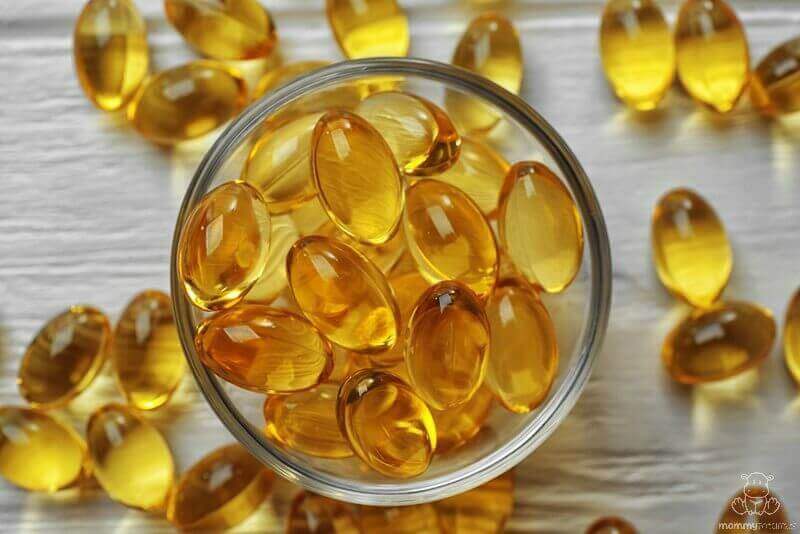
No discussion of D3 supplements is complete without talking about one of the most popular supplements in the real food community, cod liver oil. It contains Vitamin D3 instead of D3 sulfate, but both Dr. Seneff and I still recommend it. I can’t speak to all of her reasons, but I can tell you mine:
Dr. Weston A. Price has firmly established the benefits of consuming fat soluble vitamins A, D, E , and K. Unlike D3 drops which isolate one component, cod liver oil is a delicate balance of beneficial co-factors, essential fatty acids, antioxidants and micronutrients. Specifically, Vitamin D works with Vitamin A to utilize calcium and phosphorous in the body. Contrary to what we have heard, carrots contain betacarotene, which is a precursor to Vitamin A and not true Vitamin A. Not all of us are able to efficiently convert betacarotene to Vitamin A, which is why it’s preferable to consume preformed Vitamin A as well. (source)
So, isn’t consuming cod liver oil a form Vitamin D supplementation? Yes . . . yes it is.
The fact is our bodies don’t make much Vitamin D during the winter, and it makes sense to seek out additional vitamin D from whole food sources. But we still need sunshine to synthesize sulfate! According to Dr. Seneff, even in winter our skin can do this by synthesizing another compound, cholesterol sulfate – just add sunlight!
Is it a good idea to consume Vitamin D rich foods during the winter? Or even D3 drops if that is not available? Though I deeply respect Dr. Seneff’s research, I think so. As Kristen of Food Renegade said in the comments:
The ideal is to eat enough cholesterol from good animal sources and get enough sunshine so that Vitamin D levels are never a problem. The next best thing is to eat superfoods high in Vitamin D and other complimentary nutrients — like fermented cod liver oil. Perhaps the next best thing is to have quality, whole food based supplements that may mimic the synergistic nature of a superfood (I’m thinking of brands like Standard Process and their various Cataplex suplements). And finally, although it may be useless for some things, like the creation of sulfate, there’s the intake of a straight up isolated Vitamin D3 supplement which still has measurable benefits as study after study has proven. (And of course the BAD option would be to take no supplements and eat a Standard American Diet and expose yourself regularly to environmental toxins while not having a healthy enough body to eliminate them.)
Sometimes, we can’t let the good be the enemy of the ideal. And, of course, that means we should know what the ideal *is*.”
So what’s my takeaway from all this? I still focus on feeding my family nutrient-dense foods which contain lots of fat-soluble vitamins, but I don’t rely on them exclusively to meet our Vitamin D needs. Just like exercise and good quality sleep, I consider responsible sun exposure to be beneficial both for Vitamin D production and the regulation of our circadian rhythm.
This article was medically reviewed by Madiha Saeed, MD, a board certified family physician. As always, this is not personal medical advice and we recommend that you talk with your doctor.


I don’t like hearing this, since we depend on d3 drops most of year where I live.
Where do I get D3. Whar kind do I bu
Me neither Angela – I have just spend £10 on some quality D3
Sorry, ya’ll! I hope the discussion at the bottom on winter supplementation and sulphate synthesis makes you feel a little better!
What about regurarly `sunbathing´ under a solarium, the sulfatesynthesis should also work?
I would like to send you photographs from the fifties in The Netherlands, where feeble children played at the “consultation office” under solaria to enhance their health.
so what are we supposed to do with no sun for 6 months out of the year??
No sun at all, Sarah Whitsett Finks? Or just rays that don’t produce a lot of vitamin D?
we live in Ann Arbor. Most of the winter it is overcast no sun. Seriously maybe an occasional day with sun here and there. Suggestions?
I totally get where you are coming from, Sarah. I live in Illinois and it is very overcast with no sun at all a good deal of the year. I have observed that many of these holistic authors have no response to that since they live in places where sunshine is abundant. Take the Vitamin D3 is my recommendation!
I read an article once in the NYT by a doc regarding getting enough D for the year from the sun. He stated that being exposed all summer for 10-15 minutes a day made enough for the whole year. Just need to be mostly nekkid during those 10-15. 🙂
That’s definitely a good way to build up stores, Sahn Lee! I’m not sure about sulphate, though. Good new is that we can produce that via sunshine even in winter if we go outside 🙂
except, not if you live too far north. in boston, you can only make vitamin D during about 6 weeks of summer, if and only if you are out between 12 and 3 (but not at 3:30), because the sun needs to be at a certain height to give you the right rays for D production.
that and, i’m just not in league with this researcher. sure, real sun is much better, it’s totally true, but D3 supplementation is so well documented in its ability to improve health that it’s not really accurate to say that it isn’t working. we can certainly say that it isn’t optimal, or that it isn’t complete, but sadly, we don’t all live on a beach at the equator, so, better D3 than nothing! 🙂
Well, hello there Miss Katja! I believe I miscommunicated in that previous comment. I meant that it appears we can make cholesterol sulfate in the winter, not vitamin D!
Where’s the research on this? If we can’t produce Vit D, how then can we produce it’s cholesterol sulfate when it seems it’s caused by the same reaction on the skin? Also, exposing your skin to rays that are lower than 50 degrees on the horizon actually ups your risk of skin cancer. Doesn’t seem quite right to say our skin could make the cholesterol sulfate at a time when it can’t make Vit D. I feel very confused.
Good info to know. Very much looking forward to learning how to make my own sunscreen!!! 🙂
We have a “happy light” it is supposed to imitate the sun but it doesn’t cause your body to produce vitamin D. So is taking vitamin D supplements really pointless and I just need to move south:)
That’s a tough question, Sarah Whitsett Finks! I honestly don’t know. Are sun lamps common in your area? When my husband went to college in Denmark a lot of the population used doctor-prescribed sun lamps under similar conditions.
I read fast with three littles around me, so forgive me if you answered this…so sunlight is the best form of Vitamin D, but should we still take our VD3 to help with calcium? Or stop spending our money on Vitamin D3? I will order my fermented cod liver today! Thanks!
Hi Monica! That’s a great question. Personally, I’m unconvinced that isolated D3 is as effective as D3+Vitamin A for transporting calcium and phosphorous to bones, so I stick to D3 + Vitamin A in the form of cod liver oil.
I think that is a personal decision. Personally, I consume lots of Vitamin D3 rich foods because I think they are very beneficial. If those foods were unavailable I’d probably supplement with D3 drops. As Kristen said, “we can’t let the ideal be the enemy of the good! If all we can manage is something “good” but not “best,” we shouldn’t stop doing the good thing just because it’s not good enough!”
The issue is not the dose,but the 25(OH) serum level.
If you at 100 pounds and me at 250 pounds ate 600 IU of D/day, we’d have quite different serum levels.
Cheers.
Which foods are rich in vit D? And also what brand of cod liver oil do you use? Thank you 🙏🏽
I’ll join in on the “what if there’s no sun?” question. 🙂 I do supplement with D3, and take fish oil too (switching to FCLO this next time), but I want something that’s going to work, I course! 😉 Perhaps drinking raw milk? But what if the cows are in the rain too? I love this series, by the way! 🙂
I’m glad you do, Kirsten! To answer your question, raw milk does seem to be a good option as long as the cows are getting some sun. Other than that, I wouldn’t worry about a rainy patch here and there 🙂
Vitamins in Raw Milk:
Raw milk contains every known fat and water soluble vitamin. To get them all, make sure you drink whole raw milk or you’ll miss those lost in the skimming process.
Vitamin C levels, already fairly low in cow’s milk (typically less than 20mg/quart- about half the level found in human milk), have been shown to drop further when exposed to ultraviolet light such as from sunlight or fluorescent lights. Store it in the dark at home, and ask your store to look into UV filters for their cold-case lights. Here are some approximate but typical amounts of vitamins found in raw milk:
Vitamin Content per quart (Approximate):
A__375ug
C__19mg
D__38IU
E__940ug
K__47ug
B1__425ug
B2__1650ug
Niacin__850ug
B6__470ug
Pantothenic acid__3300ug
Biotin__33ug
Folic acid__52ug
B12__4.25ug
Store bought milk has 100 IU D3/cup.
Arrgggh. Typo. Store milk has 100 IU D2/cup.
What a bummer, just when you think you have found the magic pill! 🙂 I take a capsule and give my 2 kiddos a drop a day (400 IU). I don’t think it is harmful, so we’ll keep taking it, even though it may not be the “be all, end all” like I thought. We live in Oregon – rain and uninviting weather for about 8 or 9 months on the year. I guess we need to just get out more and have fun puddle jumping! 🙂
Thanks for the posts I always look forward to reading your blog…
Thanks for your comment, Jill! As I edited to reflect in my post, I personally would consider D drops a worthwhile “second best” option to dietary Vitamin D3 because it is clearly beneficial for calcium and phosphorous transport. And . . . puddles are fun!
I was taking the peppermint FCLO but then reading numerous places that pregnant/nursing mamas should limit their peppermint intake so I’m currently taking the Butter/FCLO blend! 🙂
Nobody is saying that the supplements won’t help if you are really deficient and can’t get in any sun, but they are a man-made chemical (except for cod liver oil which should be fermented whenever possible). Still you should make a point of going out in the sun for at least 15 minutes a few days/wk (everyday is even better) with as little clothing as possible and no make up, contacts, glasses and not a drop of sunscreen. Shane Ellison, The People’s Chemist, says it best: http://thepeopleschemist.com/the-vitamin-d-scam/
Do this conscientiously and avoid the doctor (which also means that you will save money on copays and scripts)!!!
The problem is, when the sun is lower than 50 degrees of the horizon, you do not benefit from it. In fact, it is the harmful rays that come through at less than 50 degrees.
This is a really interesting post. I found out I had a vit D deficiency (which was shocking, considering what I eat!) and started taking 5000IU capsules, which did raise my levels a bit, but I still had what was considered a deficiency. I switched to drops and it made all the difference. I think the deficiency also had something to do with the infertility I experienced this past year and I am now happily pregnant with our second baby. I can’t say that I agree that taking vitamin D supplements are useless, but using the drops vs. the capsules certainly helped.
Thank you for sharing your experience, Peyton! I think it provides some valuable insight worth further consideration. And YAY! Congratulations on your pregnancy!
Thanks 🙂 We were pretty surprised and so happy!
I too had my levels low. Test when first pregnant had a reading of 3. Told needed supplements. (I was then taking pregnancy multi vitamin ). Took as recommended 5 tablets which boosted me up to 12. I thin took the drops instead I got up to around 30. When out in sunshine as much as i could, but didn’t chance levels at all. Wondering why my levels stay so low. Doctor wants my levels at least 50.
I was also walking in the sun five days a week when I was diagnosed, which left me baffled that I had a deficiency!
So if your vit D levels are low and then they go super awesome with the use of vit D3 drops & FCLO what does that mean? Does it mean that your now high levels of vit D mean nothing because your body didn’t get the chance to process it itself to get the goodness? Or is it still a good thing to now have higher levels of vit D (from 5 to 65). We’re in a low sun environment too.
Personally, I wouldn’t think it does nothing. Vitamin D3 is very good at transporting calcium and phosphorous throughout the body. As I’ll go into in another post, though, eating a cholesterol rich diet and making sure sulfur intake is adequate goes a long way to helping us produce sulfate from the sun even when Vitamin D sulfate is produced.
Ahh that’s probably part of it too then. I’m referring to my son whose vit D3 levels went from 5 to 65 over 6 months with not much sun. We gave him 5000IU a day in vit D3 drops, FCLO everyday, stopped using sunscreen or hats AND switched from vegetarian to GAPS. So the higher amount of cholesterol & sulfur he is consuming probably helped too.
What about tanning beds? I was told that they want to regulate them so that no one under the age of 18 can use them. I live in Canada and it gets to -35 in the winter!
I heard Dr. Mercola mention tanning beds at the Weston A. Price conference this year. According to him they can be beneficial if they emit UVB rays (most only use UVA) and are low in EMF’s. More info from him here http://articles.mercola.com/sites/articles/archive/2006/11/11/can-a-tanning-bed-be-healthy.aspx
Hi Raquel! I heard Dr. Mercola mention tanning beds at the Weston A. Price conference this year. According to him they can be beneficial if they emit UVB rays (most only use UVA) and are low in EMF’s. More info from him here http://articles.mercola.com/sites/articles/archive/2006/11/11/can-a-tanning-bed-be-healthy.aspx
Tanning beds and UVA – FYI. I own a tanning salon and can tell you that most tanning beds have both UVA and UVB and that not very many beds have only UVA rays. I think that is important to know. Also, because I own a tanning salon I get all the news about tanning and most of which is positive. However it seems only the negative news makes the news headlines, like there is a conspiracy to cover up or not publicize possible health benefts of using sunbeds. A recent study by the University of Calgary in Canada found that regular sunbed users had the highest Vitamin D levels than any other group tested in Canada. If you Google benefits of using tanning beds you will see lots of postive associations from UVB and UVA exposure in small regulated doses to increase your health and prevent disease. Especially in Northern states and areas that do not get a lot of sunshine year round. Another study that followed 100,000 women over 20 years found those who actively seeked the sunshine and got the most sun exposure lived the longest compared to those who avoided the sun. I post lots of articles about tanning beds and vitamin d and your health on our facebook page. A great resource to learn more about tanning beds and vitamin d. https://www.facebook.com/taninthewild I hope that helps and adds some value to this discussion, sincerely, Joe
I can’t wait to learn about the sunscreen. I just got a pretty bad burn this weekend working at the farm we get our CSA box from. I know I get plenty of exposure around here, and take FCLO, I just want to be protected too. Somehow, even though my 1 year old and my husband were out just as long as I was, they didn’t get burned at all.
Do you only take FCLO in the winter?
No, I take it during spring/summer as well for it’s antioxidant benefits. As I’m writing about in a post for later this week some individuals find that it helps them be in the sun longer without burning.
I tend to think of it in terms of a sliding scale ranging from the bad to the ideal. There’s no denying the multiple studies done on the positive impact of high dosing Vitamin D on preventing everything from depression to birth defects to ear infections. And you can bet money those vitamin D3 supplements were probably even synthetic. Does that mean we should all run out and take synthetic Vitamin D3? No way! But it does show that there’s some benefit to taking it.
The ideal is to eat enough cholesterol from good animal sources and get enough sunshine so that Vitamin D levels are never a problem. The next best thing is to eat superfoods high in Vitamin D and other complimentary nutrients — like fermented cod liver oil. Perhaps the next best thing is to have quality, whole food based supplements that may mimic the synergistic nature of a superfood (I’m thinking of brands like Standard Process and their various Cataplex suplements). And finally, although it may be useless for some things, like the creation of sulfate, there’s the intake of a straight up isolated Vitamin D3 supplement which still has measurable benefits as study after study has proven. (And of course the BAD option would be to take no supplements and eat a Standard American Diet and expose yourself regularly to environmental toxins while not having a healthy enough body to eliminate them.)
Sometimes, we can’t let the good be the enemy of the ideal. And, of course, that means we should know what the ideal *is* — which is what blog posts like this one you wrote are excellent at doing.
Thank you for this thought provoking response, Kristen. I’m going to edit my post to reflect these insights 🙂
Yikes. I meant to say we can’t let the ideal be the enemy of the good! If all we can manage is something “good” but not “best,” we shouldn’t stop doing the good thing just because it’s not good enough!
Oh wow, I didn’t see the typo up there. Totally read it the way you meant it. Thanks again for sharing your thoughts. They have been very helpful!
Do you agree that we shouldn’t wash most of our bodies with soap after being out in the sun to maximize the vitamin D?
Yes, I do 🙂
Love your post on sunshine! Xoxo. The fear factor out there is keeping everyone out of the sunshine and slathering on lotions loaded with-not-so-good-for-you things that may be the actual cause of skin cancers! And there is the learning that what you put on your skin you should be able to ingest through your mouth. As in food for your skin is food you would EAT. Your skin is an organ too. A big one. There is so much more to learn about our sun and it’s affects on us on all levels plus also the stuff sold as safe and good (in our foods and lotions, etc) for you that really isn’t. Thank you for your wonderful blog! I’ve learned that fear shuts down the ability to think and learn.
While I appreciate Dr. Senoff’s views I do think a quality D3 supplement is great for health! ..we live on east coast and take D3 and cod liver oil off and on year round..and our health has improved and it took us a year to get our Vit. D counts up.. I do prefer the sunlight any time I can get it! 🙂
I agree, Carie Connell. I am a huge fan of dietary D3 (preferably in whole food form), but her insights into the need for sunlight for sulfate are new to me.
So I always feel conflicted about this sunscreen/burn/clo issue. We eat pretty well (ok so we’re not perfect), but do take FCLO/HVBO regularly. But we’re pretty pale here in Virginia after winter and we’re going to Florida this weekend for vacation. Do I just chance that we (myself, husband, toddler) don’t get burned? How do I know! Some people do all of these things and still get burnt! I know the best thing to do is cover up, but then we’re not getting all that good Vit D. We will probably be at the beach most of the day everyday for a week. Thoughts? I’m clearly confused!
Looking forward to getting my hands on that sunscreen recipe of yours! 🙂
From what I understand, liver stores of vitamin D do not last very long. Certainly, getting plenty of sun in the summer will not carry you through a dark winter.
I am light-skinned and live in California. I trusted sunlight alone for a long time and ended up with the lowest possible vitamin D level my doctor had ever seen. My endogenous production was 6; exogenous was 0. I had a list of symptoms as long as my arm. This was after several years of vegetarianism so there were compounding problems, for sure. But it was still a scary experience that I don’t wish to repeat.
I’m an avid sunbather. I try to get sunlight every day, during different times of day. It can rain here for weeks at a time, but most of the time it’s sunny. Still, I don’t trust sunlight alone. I take vitamin D every day and that’s the only way I’ve found to maintain a normal vitamin D level. I think it’s wise to use both sources — as you say, there are benefits for both.
I found the Dr Mercola article on sun exposure. (What happened to the using the words “sun bathing”? Any way this article doesn’t sell product at the end of it for a change. 🙂 Just some good useful info. http://articles.mercola.com/sites/articles/archive/2012/03/26/maximizing-vitamin-d-exposure.aspx?e_cid=20120326_DNL_art_1
“The ideal is to eat enough cholesterol from good animal sources and get enough sunshine so that Vitamin D levels are never a problem. The next best thing is to eat superfoods high in Vitamin D and other complimentary nutrients — like fermented cod liver oil. Perhaps the next best thing is to have quality, whole food based supplements that may mimic the synergistic nature of a superfood (I’m thinking of brands like Standard Process and their various Cataplex suplements). And finally, although it may be useless for some things, like the creation of sulfate, there’s the intake of a straight up isolated Vitamin D3 supplement which still has measurable benefits as study after study has proven. (And of course the BAD option would be to take no supplements and eat a Standard American Diet and expose yourself regularly to environmental toxins while not having a healthy enough body to eliminate them.)
Sometimes, we can’t let the good be the enemy of the ideal. And, of course, that means we should know what the ideal *is*”
“The ideal is to eat enough cholesterol from good animal sources and get enough sunshine so that Vitamin D levels are never a problem. The next best thing is to eat superfoods high in Vitamin D and other complimentary nutrients — like fermented cod liver oil. Perhaps the next best thing is to have quality, whole food based supplements that may mimic the synergistic nature of a superfood (I’m thinking of brands like Standard Process and their various Cataplex suplements). And finally, although it may be useless for some things, like the creation of sulfate, there’s the intake of a straight up isolated Vitamin D3 supplement which still has measurable benefits as study after study has proven. (And of course the BAD option would be to take no supplements and eat a Standard American Diet and expose yourself regularly to environmental toxins while not having a healthy enough body to eliminate them.)
Sometimes, we can’t let the good be the enemy of the ideal. And, of course, that means we should know what the ideal *is*”
Its really hard when you live in the North Pole, seriously dont ever move to ND our winters reach -65F with the windchill
Its really hard when you live in the North Pole, seriously dont ever move to ND our winters reach -65F with the windchill
That does sound hard, Maria Castro. I’m sending an email to Dr. Seneff with some follow-up questions. One of them is whether sulfates can be stored in the body for long periods of time . . . make we need sunlight to make them but can do that more in spring/summer? I’m not sure. She’s super busy so I’m not expecting a response anytime soon, but I’ll let you know what I find out!
I love ND but that is one of the things that is hard for me over here; however the rough winters do keep bugs away and crime low lol too cold to go steal anything 😉 Summer time we stay outside as much as possible, love the summers here sun is out until 9-10pm sometimes!
maybe not “make” – lots of typos today!
we are like you in Ann Arbor, and I have to take them. I can feel my energy drop if I’m not taking them. We are so sun starved. And sometimes the temps are too frigid, even if you could get a few cloudy rays. You’d be frost bit, and the only part of our body that sees the sun for about 6 mos of the year is our nose.
After going Paleo last fall and switching to pastured meats I noticed a drastic change in my skin chemistry. Although I live in New England, I’m English and used to burn very quickly. After the diet change, I couldn’t even tan never mind burn. I’ve added back some carbs to my diet so I’m mostly following a Primal diet at this point but still eating pastured meats. I’ve sat out in the sun whenever possible since the equinox for at least 30 minutes and sometimes for hours. I’m only now starting to notice a tan. I haven’t burned once this year.
Here is the link to Dr. Seneff’s blog: http://stephanie-on-health.blogspot.com/
Dr. Mercola says that it takes 48 hours to absorb the vitD off of your skin so you should not use soap when you shower on areas with sun exposure. I wonder if this researcher has come to the same conclusion? Sorry if this is addressed somewhere in your blog and I missed it. Also in one of Mercola’s articles it states that you can only get UVB(which makes vit D) during certain times of the day. He lists a website where you can look up where you live and what times the UVB is shining. I though that was so helpful. Although he says they correct for daylight savings, someone in the comments says that it does not. So I’m kinda ify on the starting and ending times. Also…I did not know that glass filters out the UVB. So if you are behind glass you are only getting damaging rays. Really informative article…http://articles.mercola.com/sites/articles/archive/2012/03/26/maximizing-vitamin-d-exposure.aspx
I did not know about vitamin D sulfate! Great news that it’s in raw milk!
For people who are fair-skinned: you don’t need as much sunlight to synthesize vitamin D, so I would just not expose your skin as much if you are concerned about burning. Ideally you would be fair-skinned in the higher latitudes and darker-skinned in the lower latitudes. If not, you’ll have to be more conscientious about your sun exposure.
It seems to me that traditional people in northern climates were more often dairy cultures and also consumed seafood and fish liver oil. They would also still go out in the sun in winter but surely not as much as in the warmer months. They were also usually fairer-skinned people. Being a fair-skinned person in the Pacific Northwest, I tend to look at these cultures as an example for how to obtain enough vitamin D. I believe it’s still important to be aware of one’s personal needs though, especially considering that illnesses and toxins deplete the body of nutrients.
I noticed a huge difference in my mood and energy levels after spending time out in the sun this spring, so there is definitely something to this line of thought. The most natural form is always the way to go – when you can -. We take our FCLO & vitamin D3 supplement but don’t notice nearly the same boost, and it felt like the adrenal fatigue that came over me in late fall disintegrated as the sun shone brighter. I used to tackle every nutrition aspect that I came across and beat it to death to squeeze out every last fact I could before I felt confident to move on it. I have now learned to trust my intuition and instinct to know what’s right for us. I think you may be on to something mama. 🙂 And I agree that supplementing cannot be as useless as Dr. Seneff hypothesizes. It just depends on the source and the individual’s diet as a whole.
While we agree, sun exposure is the best source to get your vitamin D, this idea that vitamin D sulfate is more important than just plain old vitamin D has little scientific backing. In fact, researchers in the 1980s looked for vitamin D sulfate in human breast milk and didn’t find any (Hollis et al 1981). Some of the biggest researchers in the field looked into the issue of vitamin D vs vitamin D sulfate in the 80s and dropped the topic moving forward, probably for good reason.
Again, moderate, sensible but frequent sun exposure is ideal for many reasons (including vitamin D production), but to date, there is no evidence to suggest that vitamin D from a pill is any different than vitamin D from sun exposure. There have been studies, however, that have found beneficial effects of sun exposure independent of vitamin D. One such study found that sun exposure was independently protective against multiple sclerosis; though we know vitamin D is protective against MS, too.
Announcing that, “…vitamin D supplements are useless” is misleading and a disservice to the public. How do we know? By the countless randomized controlled trials that have found benefits in supplementing with vitamin D. Just this past winter, researchers discovered that 3,000 IU of vitamin D/day during the wintertime reduced blood pressure in hypertensive patients. Are vitamin D supplements useless to a hypertensive patient? No.
Another study came out that found 4,000 IU of vitamin D/day for a year reduced mortality five-fold in patients with cystic fibrosis. Are vitamin D supplements useless to cystic fibrosis patients? No. In fact, they might even be life saving.
While we are sure Stephanie Seneff has the best of intentions, it’s important to be careful in what is publicly recommended. Since there hasn’t been a peer-reviewed paper published on vitamin D sulfate since 1995, it’s probably not necessary to stir the pot on this subject.
-The Vitamin D Council
Excellent reply from Dr Cannell of The Vitamin D Council. He has a wonderful site with some of the best and latest information on Vitamin D– with home Vit D testing available.
It is critical to test and not just assume your levels are adequate– even though you are on a sufficient diet and have sun exposure. There are many things that can interfere with metabolizing D– gut issues, fat malabsorption, thyroid, liver issues– conditions you may not realize you have.
I would also refer the readers to sites with hundreds of studies on Vitamin D:
Grassroots Health/ Vitamin D Action
http://www.grassrootshealth.net They also have a home test kit for D…
VitaminDWiki.com
Also Stephanie did not notice this:
Dave Wetzel of Green Pasture Products –maker of the Fermented Cod Liver Oil discloses in his assay that the D contained is mostly D2 and not D3. Chris MasterJohn of WAPF says there is much we do not know about Vitamin D– and Dave Wetzel agrees…
I recently found out I am severely Vit D deficient, and have been in the past as well. This time I’m searching for a way to correct the problem, instead of “bandaid it”. Thank you so much for providing this research and commentary Mommypotamus! I now feel like my prayers have been answered, and I have a good plan of how to get my body healthy. I’ll keep you updated. 😉
This is interesting information. However, I live on the CA/OR border where getting enough sunshine in the winter is a problem. I found out a few years ago that I was severely deficient in Vitamin D, so began using supplements. These supplements cured my depression as well as my chronic illnesses. Once my D levels were back to normal, I stopped being constantly sick with colds, flu, etc., and if I do get a cold a couple of times a year it is not nearly as severe or long lasting as then. So I would not discount the efficacy of Vitamin D. I’m all for getting nutrition through foods but in my case, that was not working.
I have a question, I read stephs information and I am curious is cholesterol sulfate and vitad3 the same substance? I don’t think I produce it with sun exposure, as I did the sunbathing as much as possible, developed a nice tan without using anything else and did not improve even following a lower carb diet with carbs that are whole and minimally processed I was careful not to wash off my oils for a day ot two before taking a bath, can you make cholesterol sulfate in your skin but not vitad3? vitad3 supplements have been helping but the problem is I have to mega dose on it. I keep an eye on my symptoms to make sure I don’t take too much vitad3, I take it on a empty stomach to avoid taking up to much calcium it has improved my symptoms of metabolic syndrome and hypoglycemic symptoms despite not being type 2. everytime I lower the dose for maintance to avoid taking to much my symptoms return after about 2 months. any suggestions or thought on this?
So, I read in the Permaculture Activist that you can get highly significant Vitamin D by sun-bathing the mushrooms you plan to eat. Would this be considered plant-based Vit. D 2 (well, is fungi really a plant?) or is this sun-based, and the vitamin D3 sulfate we want? Wouldn’t that be a win-win?
Question: I have been taking fermented cod liver oil for years now but I test very low vit D levels? I started to take the butter oil with it several months ago, and still the same results! My son also has low vit D levels, and he has been on fermented cod liver oil for years as well. Any ideas?
I used to live in Alaska. The sun there never goes above the 50 degree horizon, it is therefore impossible to photosynthesize vitamin D. The native people there survived for thousands of years by consuming a diet of primarily walrus and whale. Their bodies have adapted in unique ways. They are the only people in the world who cannot overdose from dietary vitamin D. Too many supplements can be very dangerous! It is impossible to overdose on D from sunlight, the body will not complete the process, but will store it in a convertible form for later use. The human body can store about 2 years worth, provided there is enough sun exposure. The next best source is fatty fish. If you don’t have easy access to whale blubber, you should eat sardines. Stop wrinkling your nose! They’re good for you, and 2 cans have almost the entire daily requirement.
I work in a doctor’s office with an in-house lab. The doctor runs blood tests on every patient who comes into her clinic to evaluate vitamin D levels.
For those whose levels are low, she places them on medical-grade supplements and schedules a follow-up lab test, the time-frame ranging from 1-6 months depending upon the patient and the urgency of whatever else they have going on.
I can state with absolute certainty that the supplements she prescribes to her patients are just as good as sunshine in terms of their impact on vitamin D levels.
I’m not going to mention the brand, as I don’t want to come off as trying to promote something, but suffice it to say there are supplements out there that are high-quality and will suffice when sun isn’t an option. You just won’t find them at your grocery store, drug store or GNC.
Where do I find vitamin D sulfate? It’s not on Amazon.
Vitamin D sulfate isn’t sold as a supplement, unfortunately. It’s something your body makes when your skin is exposed to sunlight.
Ok, so the next question would be, is it possible to develop a vitamin D sulfate supplement?
Vitamin B12 promotes energy production by supporting the adrenal glands, red blood cell formation, and helps convert carbohydrates to glucose – the fuel our bodies use for energy.
My daughter has been taking 1/2 teaspoon of cod liver oil (Green pastures for many years, and rosita’s for the past few years) her entire life, and she is 10. I just got her D3 levels tested and they are low at 25 ng/ml. This is discouraging! Can you recommend a brand of D3 drops? Thank you!
Maybe you won’t get my comment on such an old thread. I linked to it from your newer article on CLO you shared yesterday in a FB post. Anyways. I’m thinking a whole other question. Maybe you can ask your MIT researcher friend if she could please study whether Alzheimer’s is a prion protein folding disease (I think yes) and whether in a healthy and balanced state the body is continually keeping prion folding at bay and maybe those relatively newly discovered lymph tubes passing in/out of the brain have something to do with that job. And if it is then wouldn’t systemic inflation hamper that?
Back on the subject of this article I wonder how a sensitivity to sulfites (in food/wine) could be related to the vit D/sunshine deficiency?
If you can afford it, they have full spectrum lighting that you can purchase for your home, specifically for that purpose.
i bet the person who wrote this doesnt live in the northern hemisphere where low vit d and high rates of MS exist such as orkney scotland.
No vit d in scotland october to april. Average summer temp s 16 degrees with